.png)
EURASIA DANCE PROJECT INTERNATIONAL NETWORK
STEFANO FARDELLI
EurAsia Dance Project – International Network, directed by Stefano Fardelli, is one of the biggest dance networks worldwide, with more than 25 institution partners all over the world throughout Europe, Asia, Middle East, Africa, North & South America. The network combines art, human rights, education, safeguarding the cultural heritage in only one huge project, and it gives young dancers and choreographersa access to artistic residencies, meetings, shows and dance opportunities at the highest level of the global dance scene.
An integral part of the network are EurAsia Dance Company (E.D.C.), the official dance company of the Network composed by the EurAsia Dancers and so those dancers that have been selected in all the five continents through the EurAsia Auditions, and the EurAsia Repertory, composed by 17 pieces created by Stefano Fardelli, inspired by the meeting with the different cultures and realities during the tours of the Company around the world.
STEFANO FARDELLI
ARTISTIC DIRECTOR
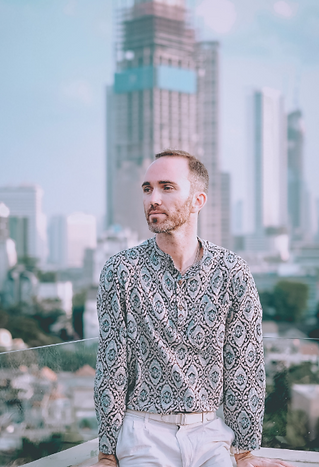
Choreographer, teacher and founder, as well as Artistic Director, of the EurAsia Dance Project International Network ETS, an international organisation active in over 25 countries across five continents. Since 2020, he has been responsible for the organisation of the Contemporary Dance Department at DanceHaus Milano.
After graduating from the Susanna Beltrami Academy in 2004, he developed an international career, collaborating with prestigious institutions and artistic organisations, including Berlin Opera, BBC, Royal Finland Opera, English National Opera, DV8 Physical Theatre and Roberto Bolle.
His repertoire and the E.D.C. – EurAsia Dance Company are supported by DANCEHAUSpiù, the Italian Embassy, the Consulates General of Italy, the Italian Cultural Institutes, the General Delegation of Wallonie-Bruxelles, and all EurAsia Partners worldwide.
In 2010, he was selected by the Ministry of Youth among the Italian talents chosen to represent Italy around the world. In 2023, he was selected by the Ministry of Foreign Affairs as a candidate for the directorship of the Italian Cultural Institute in Delhi, as a candidate of “clear distinction”.
MAYA
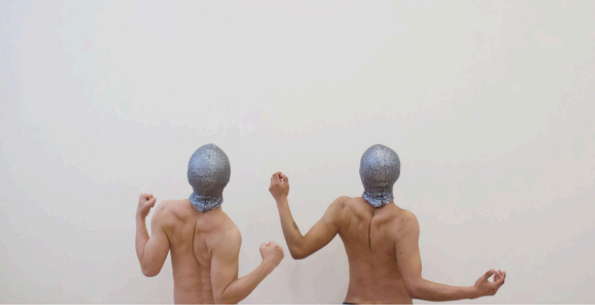
COREOGRAPHY| Stefano Fardelli
EurAsia DANCERS | Marco Hernandez (Mexico), Jesus Rea (Bolivia), Tejaswini Loundo (India)
VERSIONS | solo or duet or trio
REHEARSAL ASSISTANT | Tavishi Pownikar (India)
MUSIC | Sync Inter di Alva Noto – Epilogue di Alva Noto – Flujo Cuenquito
COSTUME DESIGNER | Marco Hernandez | De La Croix (Mexico)
VISUAL ARTIST | Matteo Bittante (Italy)
INSTALLATION | paper installation
duration 30'


- MAYA - does not want to be related to the ancient American civilisation, but MAYA is the word in Sanskrit used in Asian cultures to indicate the Indian religious and philosophical concept of ‘cosmic delusion’, embracing the entire non-existent and illusory world, as opposed to the only known recognized reality which is called Atman. The piece is inspired and dedicated to all those people forced to live a second life, hidden from the eyes of “the only recognized” society and rules of it, behind the curtain of their private lives, in the constant condition of fear, loneliness, misunderstanding and frustration. Through the study of some specific traditional dances, originally based in specific countries, and of some dances performed in the past only by women in moments of entertainment for men, the dancers of the Company have acquired the technical elements of those techniques, the qualities, the rhythms, the body languages, the symbolisms , the rituality of the movements for then elaborate everything and create the new movement sequences that gives life to this new creation. All while remaining abstract, in the code, form and dramaturgy of the piece far from any form of judgment and comment on the vast and delicate topic chosen. The interesting process of "translation" and "transformation" of the basic elements of the traditional techniques that we examined also give us the possibility of experimenting and hypothesizing what their evolution could have been or what could be in the future and therefore an evolved form of the same movements but in a contemporary perspective.
OMMANIPADMEHUM

COREOGRAPHY | Stefano Fardelli
DANCERS| Umberto Gesi (Italy), Tejaswini Loundo (India), Marco Hernandez (Mexico), Jesus Rea (Bolivia)
ORIGINAL MUSIC | Francesco Ziello
MUSIC | 10 Preludes Op. 23 by Serjei Rachmaninoff, Concerto For Violoncello And Strings by Dobrinka Tabakova, The Well-Tempered Clavier Book1 by Johann Sebastian Bach, Such Different Paths by Dobrinka Tabakova
REHEARSAL ASSISTANT | Jesus Rea
COSTUME DESIGNER | Marco Hernandez | De La Croix
VIDEO MAKER | Salvatore Lazzaro
VISUAL ARTIST | Matteo Bittante
PHOTOGRAPHY | Salvatore Lazzaro e Antonino Dimondo
duration 35'
Ph Salvatore Lazzaro e Antonino Dimondo


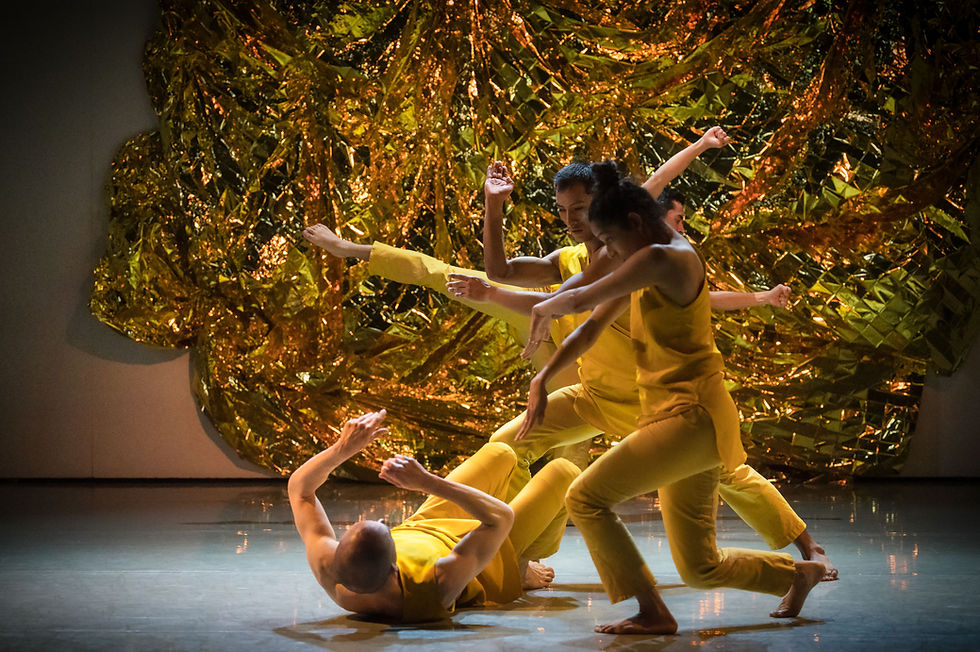
OM-MANI-PADME-HUM which in Sanskrit literally means “honouring the lotus jewel”, focuses on the history and rituals of the Tibetan Buddhists of the Yellow Hat Order with a particular focus on their connection to the Shaolin monks and thus the study of their training. The encounters with the Buddhist monks and the martial arts students, the study of their practice and ceremonies are the foundation of the choreography. When the bell starts to play the rite begins, the dancers enter what could be a temple and lead us in another dimension and place, accompanied by the Francesco Ziello original music. Hats, cloaks, a sun symbol of the divine, and the gold of temples are often rendered abstract by an aseptic architectural use of space and by string or orchestral music that creates contrasts between oriental images and western sounds. To conclude, a multicultural cast that translates the movements of the Shaolin monks with different nuances that reveal the origins of the various dancers and thus a quality of movement linked to the traditional dances of the performers that influence, and give character to, the entire piece.